
Endometriosis: Pain That Is Not Normal. Our First Event at the Mwandamo Women Space!
On Saturday we opened the doors of the Mwandamo Women Space in Arusha for the very first time to host an event, and what a way to begin.
Part One of our free online education series on endometriosis brought together women from across the health community and beyond. Nine women joined us in person, and a further fifteen tuned in online via Zoom. Between the room and the screen we had doctors, physiotherapists, midwives, doulas, women living with endometriosis, and women who are simply passionate about women's health in Tanzania.
That combination is powerful.
Clinicians, birth workers and women with lived experience were all part of one conversation, and it could easily have gone on all day.
What we learned
Our presenter, Hélène, is an osteopath and physiotherapist who has worked in women's health across Canada, Austria and, since 2023, East Africa. She is the founder of Sanfem, a training platform for pelvic care. She took us through what endometriosis is, how to recognise it, how to talk to patients about it, and what manual therapy can add alongside medication and surgery. A few of the key messages:
Pain that stops life is not normal.
According to the World Health Organization, roughly 1 in 10 women and girls of reproductive age live with endometriosis, and it takes an average of 7 to 12 years to get a diagnosis. In Tanzania, research from Moshi found that 75% of adolescent girls report period pain, and few had ever used pain relief. Pain that keeps a girl out of school is not “just a period.”
It is often missed.
Endometriosis is frequently mistaken for PID or an STI, bowel problems, urinary tract infections, or unexplained infertility. Hélène shared the “4 Ds” to listen for: painful periods (dysmenorrhoea), pain during or after sex (dyspareunia), painful urination (dysuria) and painful bowel movements (dyschezia). Asking every woman, “How are your periods, really?” is a good place to start.
Diagnosis can start in your clinic.
Under international guidance (ESHRE 2022), a working diagnosis can be made from history, examination and ultrasound, and treatment can begin without surgery. This matters in settings where laparoscopy and MRI are only available at referral hospitals. A normal ultrasound does not rule endometriosis out, because superficial lesions are usually invisible on imaging.
The words we use matter.
Many women have been told for years that their pain is normal, or that it's stress. Hélène encouraged us to listen, believe, name the pain, explain the body, and plan together. Believing a woman is already part of treatment. Nobody should hear “it's in your head”; instead: “Your pain is real, and your nervous system has become extra sensitive. We can calm it.”
Hands can help.
Endometriosis can set off a cycle of inflammation, sensitive nerves and tight pelvic floor muscles. Gentle, consent-based manual therapy, breathing and movement can help break that cycle alongside medical care. Hélène also shared low-cost things women can do at home, like heat, belly breathing, gentle movement and keeping a pain diary.
Everyone has a role.
As the final slides reminded us: talk about it to break isolation and taboo, and act in the way your profession allows.
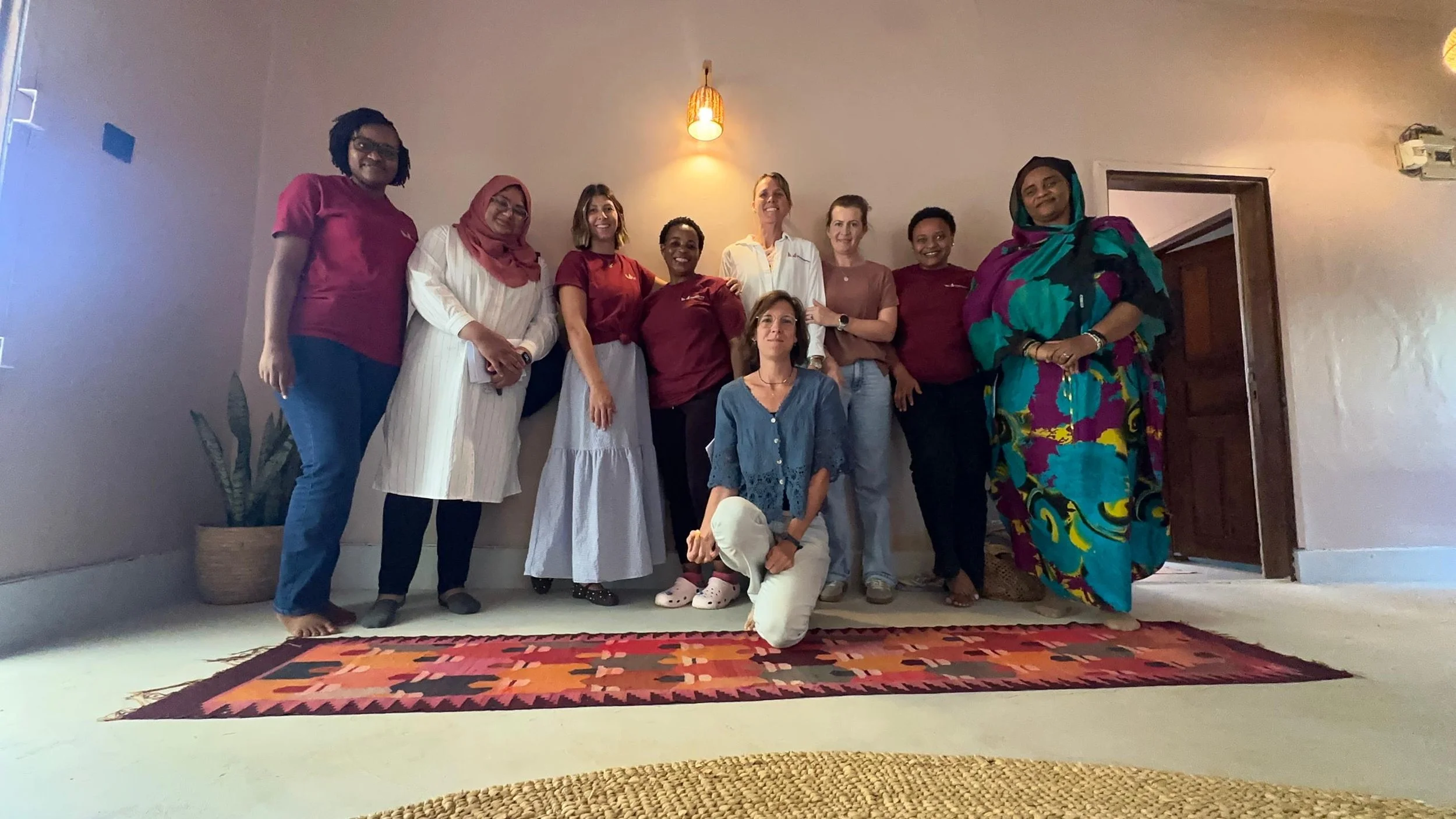
Thank you
A huge thank you to Hélène for such an informative and generous presentation and conversation. Thank you also to Cornelia (Africa Amini) for adding so much to the discussion, and to everyone who came along, in person and online, and shared their experience and questions.
Join us for Part Two
The series continues on Saturday 7th November with a follow-up seminar on the treatments available for endometriosis and the research around them. All professionals in contact with women and all advocates for women's health are welcome, in person at the Mwandamo Women Space in Njiro or online.
Learn, exchange, collaborate, improve outcomes together.
Read more
• WHO fact sheet: Endometriosis
• ESHRE guideline: Endometriosis (Becker et al., Human Reproduction Open, 2022)
• NICE guideline NG73: Endometriosis, diagnosis and management